
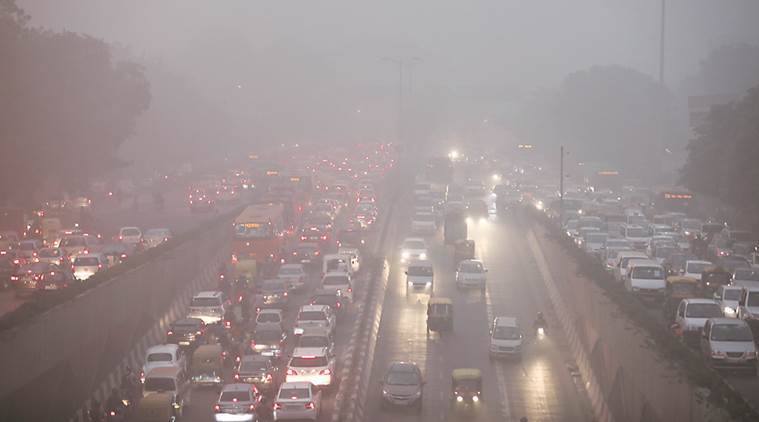
Are you Living in Industrial areas and in cities where pollution is high?
Women exposed to high levels of fine particulate matter PM2.5 during pregnancy—particularly during the third trimester—may face up to twice the risk of having a child with autism than mothers living in areas with low particulate matter, according to a new study from Harvard School of Public Health (HSPH).
Higher maternal exposure to PM2.5 during pregnancy, particularly the third trimester, was associated with greater odds of a child having ASD[1]. The Study Proves that PM2.5 increases autism.
Particles that are 2.5 microns or smaller are considered especially dangerous to human health because they bypass many of our bodies ' defenses. Nose hair, mucus, and other defenses work to catch these smaller particles before they enter deeper into our bodies. That said, PM2.5 particles can get into our lungs, where they can reach the alveoli and eventually enter the bloodstream.
PM2.5 particles are complex because they can be made up of numerous types of chemicals and particles, and they can be partly liquid, as opposed to solid, like a common dust particle. Particulate pollutants that are entirely or partly made up of liquid droplets are known as aerosol. Natural kinds of aerosols include dust, sea salt, and volcanic ash, whereas man-made sources include factory and auto emissions, coal combustion, and biomass burning for clearing land or farming.
During the 1990s, a link was established between PM2.5 and reduced heart rate variability (HRV). HRV is a measurement of interval oscillations between consecutive heartbeats, reflecting beat-to-beat control in the heart by autonomic regulation.
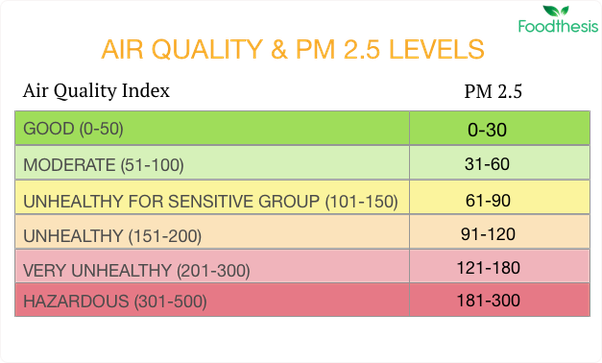
In 2015, the Government of India, together with IIT Kanpur launched the National Air Quality Index. In 2019, India launched 'The National Clean Air Programme' with a tentative national target of 20%-30% reduction in PM2.5 and PM10 concentrations by 2024, considering 2017 as the base year for comparison. It will be rolled out in 102 cities that are considered to have air quality worse than the National Ambient Air Quality Standards.[2]
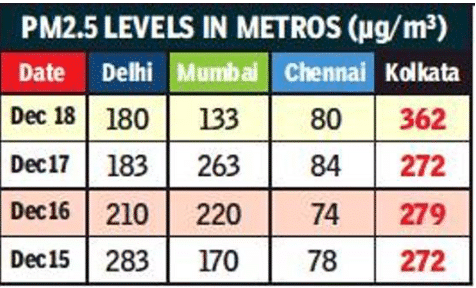
How to Prevent PM2.5
At the individual level, besides installing appropriate air-cleaning devices in our working and living spaces and wearing a protective mask whenever necessary, we can also protect ourselves through a healthy diet and smart use of proven nutritional supplements.
How to Expel PM2.5 From the Body through Diet
There are studies suggesting that omega-3 polyunsaturated fatty acids from Flax seeds may help to blunt the negative effects of PM2.5
The best Way to Expel PM2.5 is through sulforaphane. It is proven that Rapid and Sustainable Detoxication of Airborne Pollutants by Broccoli Sprout[3] Because of sulforaphane.
Sulforaphane is formed when Glucoraphanin and Myrosinase get combined during the digestion process of Cruciferous Vegetables. But Myrosinase gets destroyed during cooking since it is not heat resistant. But can be supplied by sprinkling a quarter teaspoon of mustard powder after cooking Cruciferous Vegetables [4]. Hence by Eating Cruciferous Vegetables with little mustard powder after cooking, helps sulforaphane to detox PM2.5
Reference:
1. https://ehp.niehs.nih.gov/doi/10.1289/ehp.1408133
2. https://en.wikipedia.org/wiki/Air_pollution_in_India