
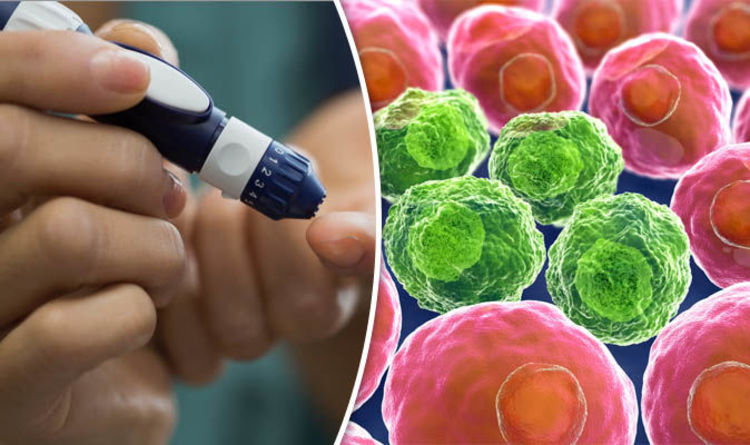
DIABETES is causing a worldwide surge in cancer, researchers say. Diabetes and prediabetes were associated with an increased risk of cancer death. Mortality from all cancers rose linearly with increasing glucose concentrations.
Don't let the “pre” fool you—prediabetes is a serious health condition where blood sugar levels are higher than normal, but not high enough yet to be diagnosed as diabetes. Prediabetes puts you at an increased risk of developing type 2 diabetes, heart disease, and stroke.
Diabetes affects every major organ in the body. People with diabetes often develop major complications, such as kidney failure, blindness, and nerve damage (nerve damage can lead to amputation of a toe, foot, or leg). Some studies suggest that diabetes doubles the risk of depression and that risk increases as more diabetes-related health problems develop. All can sharply reduce the quality of life.
"It's been known for a long time that people with diabetes have as much as a 2.5-fold increased risk for certain cancers," says John Termini, Ph.D., who is presenting the work at the meeting. These cancers include ovarian, breast, kidney and others. "As the incidence of diabetes continues to rise, the cancer rate will likely increase, as well."
Scientists have suspected that the elevated cancer risk for diabetics arises from hormonal dysregulation. "In people with type 2 diabetes, their insulin is not effectively carrying glucose into cells," Termini explains. "So the pancreas makes more and more insulin, and they get what's called hyperinsulinemia." In addition to controlling blood glucose levels, the hormone insulin can stimulate cell growth, possibly leading to cancer. Also, most people with type 2 diabetes are overweight, and their excess fat tissue produces higher levels of adipokines than those at a healthy weight. These hormones promote chronic inflammation, which is linked to cancer. "The most common idea is that the increased cancer risk has to do with hormones," Termini says. "That's probably part of it, but there hasn't been a lot of solid evidence."
Termini, who is at City of Hope, a research and treatment center for cancer and diabetes, had a different idea. He wondered if the elevated blood glucose levels seen in diabetes could harm DNA, making the genome unstable, which could lead to cancer. So Termini and colleagues looked for a specific type of damage in the form of chemically modified DNA bases, known as adducts, in tissue culture and rodent models of diabetes. Indeed, they found a DNA adduct, called N2-(1-carboxyethyl)-2'-deoxyguanosine, or CEdG, that occurred more frequently in the diabetic models than in normal cells or mice. What's more, high glucose levels interfered with the cells' process for fixing it. "Exposure to high glucose levels leads to both DNA adducts and the suppression of their repair, which in combination could cause genome instability and cancer," Termini says.
They found that DNA sustains more damage and gets fixed less often when blood sugar levels are high, thereby increasing cancer risk.
Recently, Termini and colleagues completed a clinical study that measured the levels of CEdG, as well as its counterpart in RNA (CEG), in people with type 2 diabetes. As in mice, people with diabetes had significantly higher levels of both CEdG and CEG than people without the disease.
But the team didn't stop there. They wanted to determine the molecular reasons why the adducts weren't being fixed properly by the cells. They identified two proteins that appear to be involved: the transcription factor HIF1α and the signaling protein mTORC1, which both show less activity in diabetes. HIF1α activates several genes involved in the repair process. "We found that if we stabilize HIF1α in a high-glucose environment, we increase DNA repair and reduce DNA damage," Termini says. "And mTORC1 actually controls HIF1α, so if you stimulate mTORC1, you stimulate HIF1α."
For years, scientists have been trying to solve a medical mystery: Why do people with diabetes have an increased risk of developing some forms of cancer? Today, researchers report a possible explanation for this double whammy. They found that DNA sustains more damage and gets fixed less often when blood sugar levels are high, thereby increasing cancer risk.
So far concerted lifestyle changes such as diet and exercise are known to reverse diabetes while there are no known/approved medical cures.
“It is important that effective food policies are implemented to tackle the rising prevalence of diabetes, high BMI and the diseases related to these risk factors.”
References:
1. Diabetes, Prediabetes and Cancer Mortality
X H Zhou 1, Q Qiao, B Zethelius, K Pyörälä, S Söderberg, A Pajak, C D A Stehouwer, R J Heine, P Jousilahti, G Ruotolo, P M Nilsson, G Calori, J Tuomilehto, DECODE Study Group
2. How diabetes can increase cancer risk: DNA damaged by high blood sugar
American Chemical Society, August 25, 2019